

On March 17, Standing Deputy Minister Trinh Viet Hung and Deputy Minister Hoang Trung chaired a working session with CT Group on technological cooperation.
Public–private cooperation for breakthroughs in agriculture and environmental technology
At the meeting with CT Group on the afternoon of March 17, Standing Deputy Minister of Agriculture and Environment Trinh Viet Hung affirmed the commendable capabilities and positive signals of Vietnamese enterprises in gradually mastering strategic high technologies.
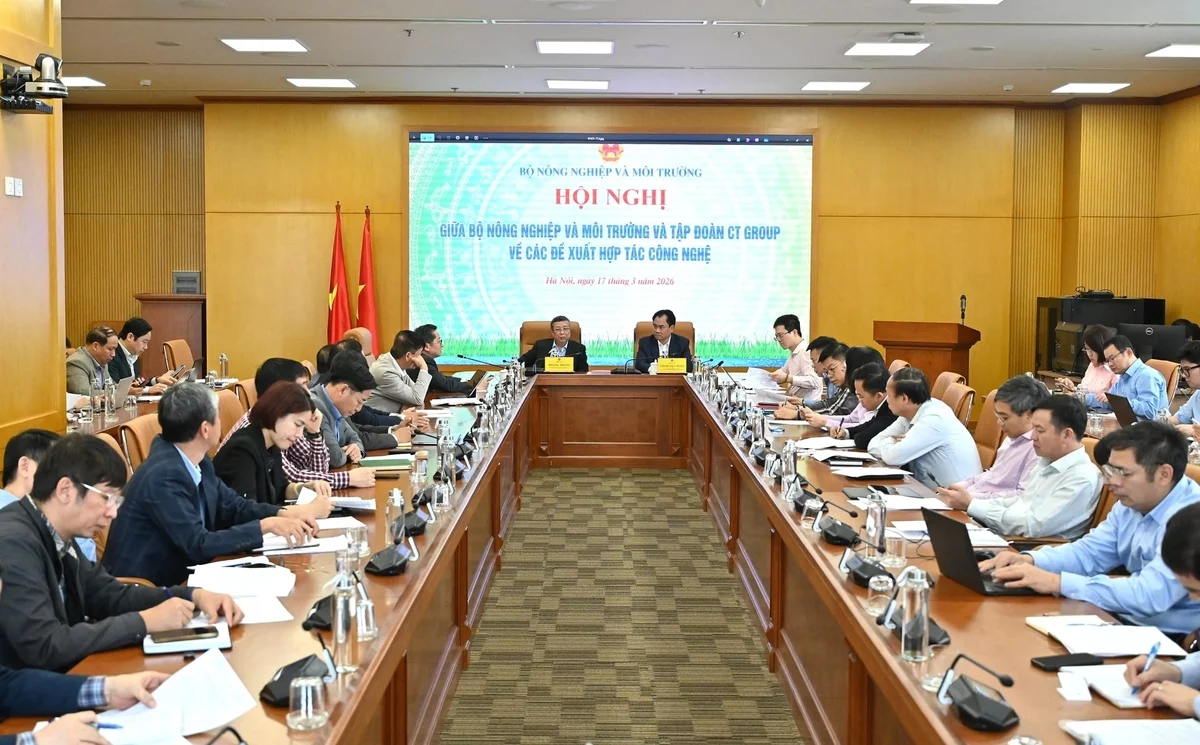
Standing Deputy Minister Trinh Viet Hung and Deputy Minister Hoang Trung co-chaired the working session with CT Group.
The Standing Deputy Minister emphasized that the Ministry of Agriculture and Environment is ready to commission products aligned with CT Group’s strengths in science and technology development, innovation, and digital transformation, aiming to directly serve the sector’s development tasks.
Accordingly, areas of cooperation must be closely aligned with the key missions assigned to the agriculture and environment sector, particularly those under the Central Steering Committee for Resolution No. 57-NQ/TW, as well as major programs and initiatives currently being implemented by the Ministry.
“In the immediate term, several areas proposed by CT Group are well aligned, such as agricultural robotics and the application of unmanned aerial vehicles (UAVs) in cultivation and production. The use of UAVs to replace human labor in certain stages will help improve harvesting efficiency and optimize labor productivity.” the Standing Deputy Minister stated.
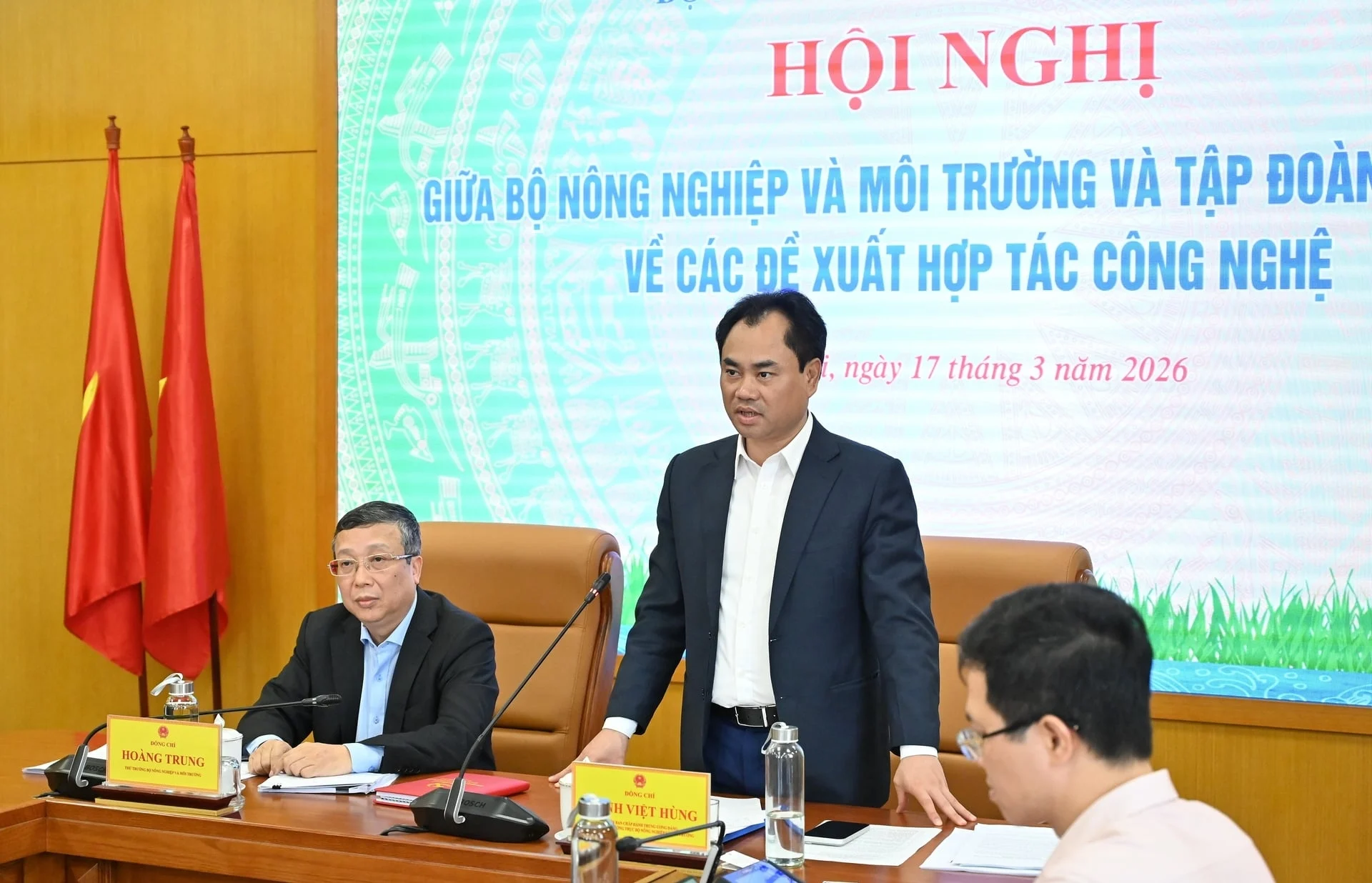
Standing Deputy Minister Trinh Viet Hung affirmed that CT Group contributes to fostering pride in Vietnamese technology.
In addition, a key focus emphasized by the Ministry of Agriculture and Environment is the development of 12 major sectoral databases. Among them, data on climate, land, and minerals, if effectively connected, shared, and utilized, will form a critical foundation for management and governance. The Ministry also expressed an urgent need to establish a carbon credit trading platform.
Speaking on CT Group’s areas of expertise, Chairman Tran Kim Chung stated that the Group possesses three core technology pillars that create strong competitive advantages. The first is digital technology with the National Digital Twin platform, enabling the simulation and operation of “digital entities” of real-world objects.
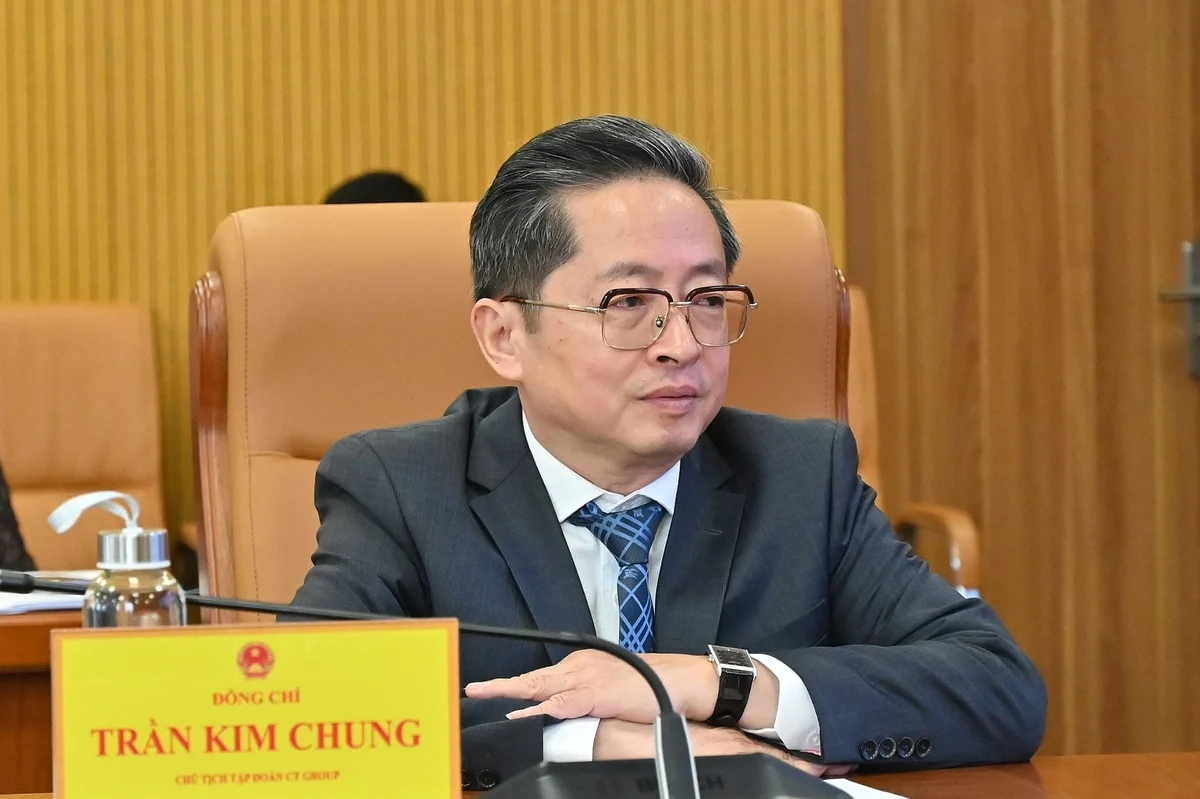
Chairman of CT Group Tran Kim Chung at the working session with leaders of the Ministry of Agriculture and Environment.
In addition, the low-altitude economy, in which UAVs serve as a new governance infrastructure, enables highly accurate monitoring and operational management while reducing labor requirements. The third pillar is biotechnology, including gene editing and precision agriculture, aimed at developing crop varieties better adapted to climate change and adverse conditions.
“We are committed to working with the Ministry to effectively implement two ‘unmanned model fields’ in the Mekong Delta and the Northern region. At the same time, we propose to jointly develop two provincial-level models for the low-altitude economy on a digital platform, and to pilot a multi-layered National Digital Twin in the agriculture and environment sector,” said Mr. Tran Kim Chung.
Commissioning technologies aligned with sector priorities
Standing Deputy Minister Trinh Viet Hung highly appreciated the proposal for the “unmanned model fields” and the ecosystem applying UAVs, artificial intelligence, automation, and digital data in modern, low-emission agricultural production.
According to him, the Ministry of Agriculture and Environment prioritizes applied scientific products that can be deployed in practice. Potential areas such as the low-altitude economy should be developed in a balanced manner, ensuring alignment between technological advancement, economic efficiency, and civil security.
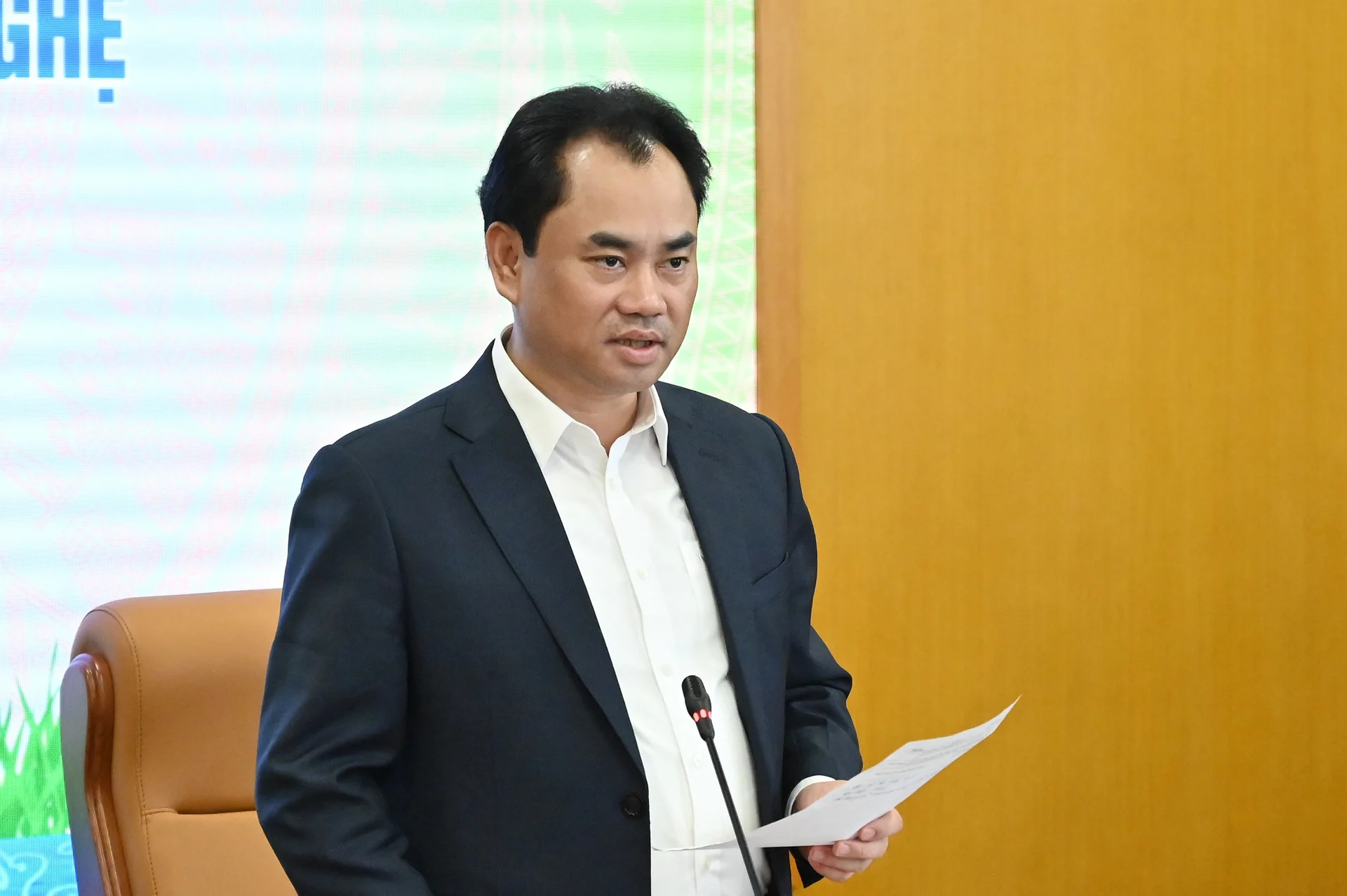
Standing Deputy Minister Trinh Viet Hung affirmed that the final outputs must be highly applicable products with economic efficiency while ensuring civil security.
On behalf of the Ministry’s leadership, he also called for strengthening in-depth working sessions between the Ministry’s functional units and CT Group’s member companies to concretize cooperation contents and accelerate practical implementation.
Speaking at the meeting, Deputy Minister Hoang Trung emphasized that cooperation proposals must align with the spirit of Resolution No. 57-NQ/TW, under which science and technology products must possess commercialization potential.
To operationalize the cooperation, Deputy Minister Hoang Trung assigned the Department of Science and Technology to take the lead in developing a ministerial-level cooperation program with CT Group, clearly defining the portfolio of technologies. Relevant units were requested to proactively propose needs, register science and technology tasks with the Ministry, and coordinate the organization of specialized working sessions with enterprises in specific fields.
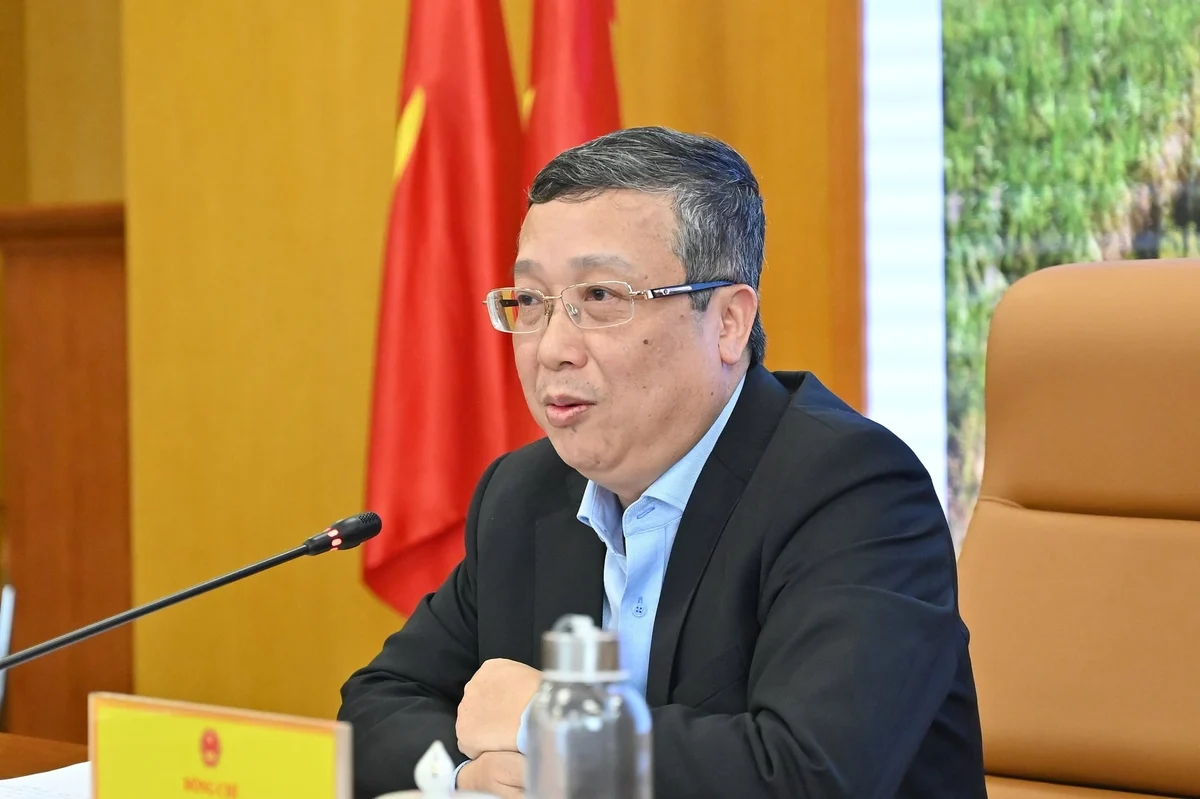
Deputy Minister Hoang Trung assessed that the technologies presented by CT Group are well aligned with the sector’s tasks and capable of addressing many of its challenges.
From the enterprise side, he requested CT Group to report to the Ministry for submission to the Central Steering Committee regarding implementation resources, while continuing to research and refine strategic technological solutions, contributing to the realization of the goals of Resolution No. 57 and promoting national growth.
According to Deputy Minister Hoang Trung, several technologies such as unmanned aerial vehicles (UAVs), unmanned surface vessels (USVs), and the Digital Twin ecosystem integrated with market value chains can be deployed immediately in practice. Meanwhile, gene-editing technology is considered particularly essential in the context of agriculture adapting to climate change.
Director General of the Department of Science and Technology Nguyen Van Long proposed that units develop science and technology programs incorporating cooperation with CT Group, ensuring alignment with central orientations and clearly reflecting the “triple helix” model (Government–University–Enterprise).
According to Mr. Long, the sector’s 12 major databases are being developed in an integrated and synchronized manner. Therefore, he suggested that CT Group work directly with relevant departments and data-managing units to align approaches and ensure a mindset of data connectivity and sharing from the outset.
CT Group is a leading corporation in the 4.0 Industrial Revolution in Vietnam – engaging in theoretical research, R&D, design, commercial production, and export. CT Group has consistently pursued a strategy of technological self-reliance, mastering some of the world’s most advanced technologies across 12 high-tech business lines, including: Unmanned Aerial Vehicles (CT UAV); Low Altitude Economy – LAE (GASCO); 15-Layer National Digital Twin (NDT 15); Robotic House (CT Modulex); Biotechnology (VGCT – Vietnam Gene & Cell Technology); CT Innovation Hub 4.0 (CT Innovation Hub 4.0); Carbon Credits (CCTPA); Semiconductor Chip (CT Semiconductor, Diginal); Space Technology (CT Verse); Autonomous Vehicle Technology (CTRANS); Artificial Intelligence Technology (CTOptimal); and Green Cryptocurrency (Carbondo). Alongside these, the Group continues to sustainably develop 3 sustainable business lines: Smart City, Infrastructure Development, including Transportation, Technical, Social, and Logistics Infrastructure and Clean Food & Beverage and Healthcare Services.
________________________
Follow CT Group on Facebook for the latest updates and news!