

Rather than viewing emissions reduction as a burden, Ho Chi Minh City is moving toward creating a market where green technologies can be capitalized and traded transparently.
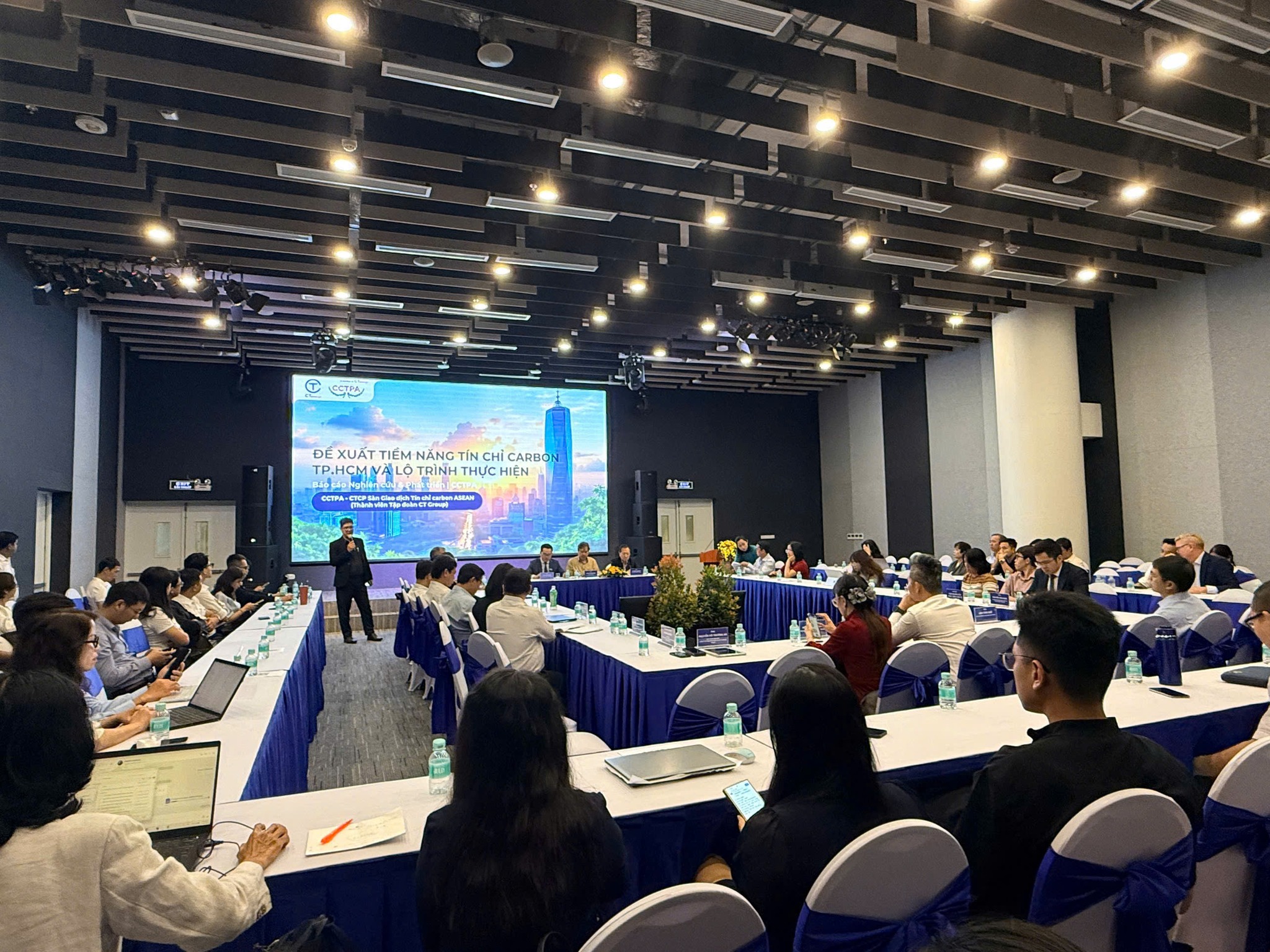
Creating opportunities to attract both domestic and foreign investment into green projects is a key objective of Ho Chi Minh City as it integrates a carbon credit trading exchange into the model of an international financial center. The city has also identified that, along its green transition roadmap, approximately 80% of required resources will be mobilized from socialized capital – leveraging international financial institutions through the special mechanisms under Resolution 98, as well as funding from investment funds. Rather than viewing emissions reduction as a burden, the city is moving toward building a market where green technologies can be capitalized and traded transparently.
According to estimates, annual CO₂ emissions in Ho Chi Minh City have exceeded 57 million tonnes. The city has set a target to reduce emissions by 10% to 30%, depending on the level of international support.
To monetize emissions reduction efforts, Ho Chi Minh City is also pursuing a carbon credit trading exchange model within its international financial center. This new mindset moves beyond concern over emissions figures alone, shifting the focus toward valuing emissions-reduction solutions. However, the value of this asset class is not uniform; it depends entirely on the “quality” of the emissions-reduction technologies involved.
Mr. Pham Dang An, Director of VP Carbon Company, stated: “One of the most expensive types of carbon credits currently available is carbon capture using new technologies – commonly referred to as carbon capture – where carbon is captured and prevented from being released into the environment. The price can reach hundreds of U.S. dollars per tonne. By contrast, some carbon credits are priced at just a few dollars.”
This divergence in value underscores the growing stringency of the global market. It poses a critical challenge for Vietnamese enterprises: the need to standardize data from the outset, particularly as carbon “quotas” under the Carbon Border Adjustment Mechanism (CBAM) have officially come into effect for goods exported to the European Union.
Mr. Nguyen Quoc Dung, Deputy CEO of the Asean Carbon Credit Exchange Joint Stock Company (CCTPA), shared: “Vietnamese enterprises need to establish robust guidelines and operate strictly in accordance with them throughout the entire project lifecycle. There are projects in Vietnam that, at the registration stage, are claimed to generate up to 100,000 carbon credits, but after validation and verification, only 20,000 to 30,000 credits remain because the process undergoes significant changes”.
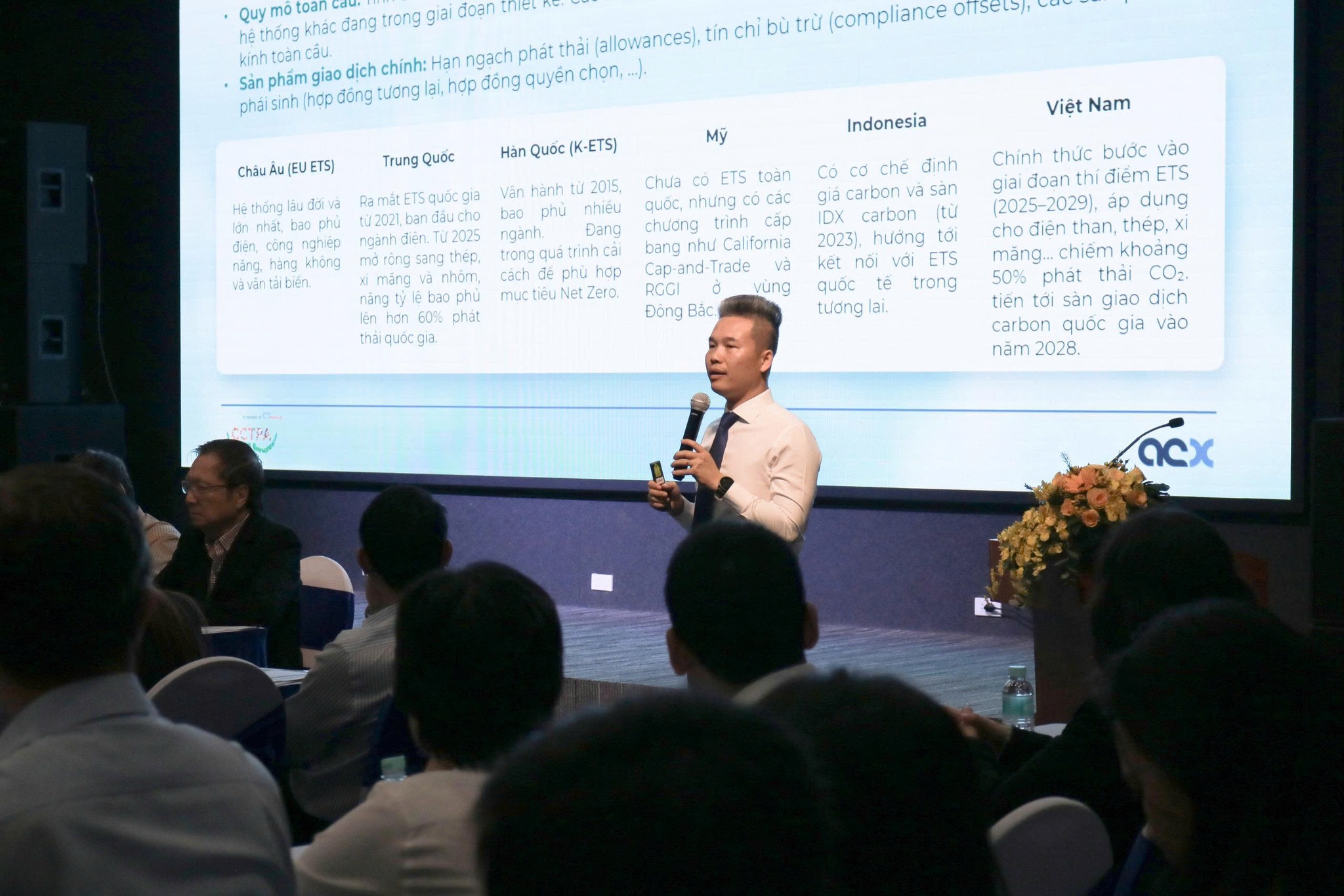
Ms. Nguyen Truc Van, Director of the Ho Chi Minh City Center for Economic and Social Simulation and Forecasting, commented: “Policy mechanisms will focus on taxation and investment, as well as technological platforms for the carbon credit exchange, including the application of technologies such as blockchain for measurement purposes, in order to prevent duplication of carbon credits on the exchange”.
By August 2025, Vietnam has issued more than 30 million carbon credits from 158 projects under the voluntary carbon market. The target of operating a national carbon exchange from 2028 not only demonstrates strong policy commitment but also underscores Vietnam’s gradual integration into the broader global carbon market.
________________________
Follow CT Group on Facebook for the latest updates and news!