

Prime Minister Phạm Minh Chinh emphasizes momentum and determination to act together in the spirit of “developing a strong, effective, inclusive, sustainable, fair and equitable digital economy, digital society and digital citizens for a strong and prosperous Vietnam.”
On the morning of December 20, at the Government Headquarters, Prime Minister Phạm Minh Chính chaired the 3rd National Forum on Digital Economy and Digital Society Development, themed “Developing a comprehensive and inclusive digital economy and digital society to achieve double-digit GDP growth in the 2026–2030 period.”

Delegates attending the Forum
In his keynote report on the development of Vietnam’s digital economy and digital society, Minister of Science and Technology Nguyen Manh Hung stated that Vietnam is entering a phase of strategic acceleration to realize its aspiration for rapid and sustainable development, aiming to become a high-income country in the coming decades. On this journey, the digital economy and digital society are no longer optional choices but an inevitable path, serving as the core drivers of growth and innovation in the development model.
Presentations at the Forum noted that Vietnam’s digital economy is currently still focused mainly on digitizing traditional activities, rather than making a strong shift toward creating new growth models. Although the share of the digital economy in GDP is increasing rapidly, domestic value added remains low, with heavy reliance on cross-border platforms. Many small and medium-sized enterprises have yet to truly participate in the digital value chain.
Therefore, the task for the next phase is not merely to do more, but to do things differently, go deeper, generate greater value added and ensure sustainability. For this reason, breakthrough and transformative innovations are urgently needed.
As the first locality to build and operate a City Open Data Portal, Da Nang has identified it as a shared data platform serving citizens, businesses and society at large. To successfully implement the Open Data Portal, Mr. Ho Quang Buu, Vice Chairman of the Da Nang City People’s Committee, stated that Da Nang early issued an Open Data Catalogue in 2023 along with Regulations on Data Sharing, and incorporated open data provision targets into its annual digital transformation plans, requiring 100% of relevant agencies to participate in data provision. Notably, Da Nang has adopted a demand-driven open data approach. Accordingly, the city has shifted from the mindset of “publishing what the city has” to “publishing what citizens and businesses need.” City departments and local authorities are required to periodically collect feedback from businesses and educational institutions on open data needs in order to deploy and provide appropriate datasets.
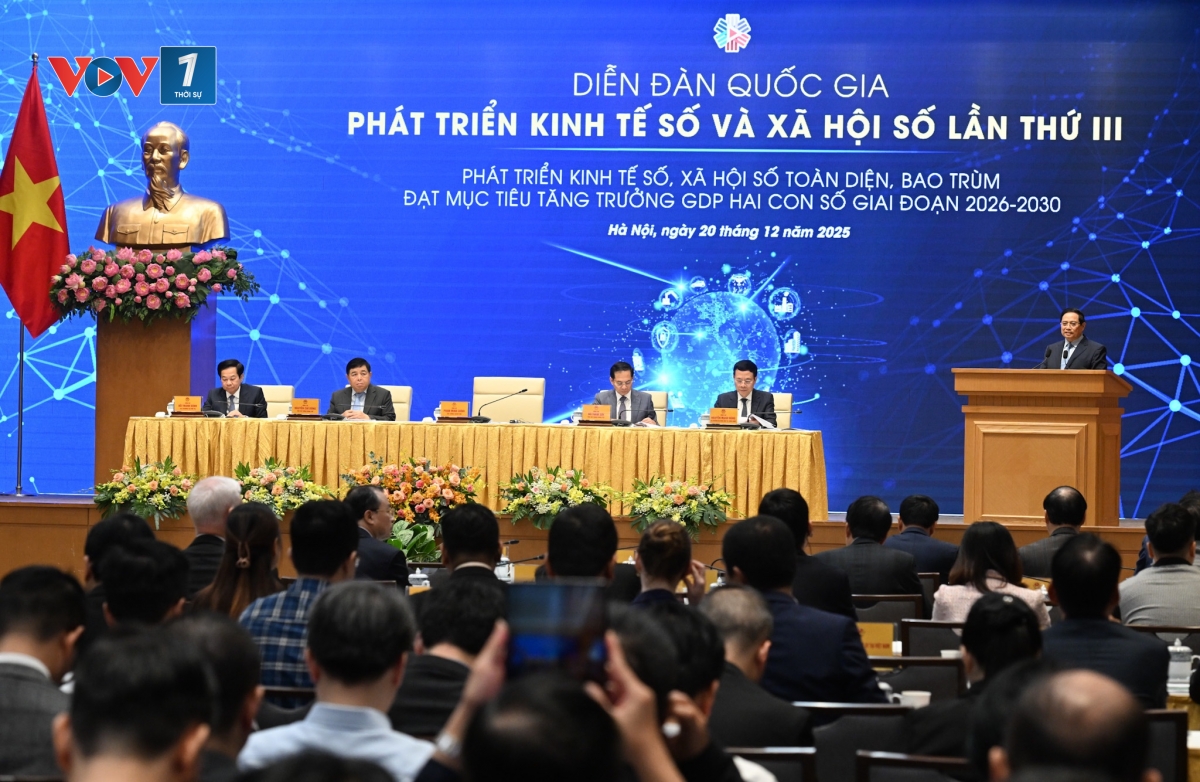
Forum overview
Participants proposed the creation of a national digital economy architecture, rather than fragmented digitization across individual sectors. This involves shifting from a model in which each industry implements its own digital transformation project to redesigning the overall economic structure based on shared digital infrastructure layers such as telecommunications, the internet, computing, digital data, AI, digital platforms, and digital services. In this process, the State must act as the chief architect of the national digital economy and digital society, shaping the overall structure to enable effective market operations.
Emphasizing the development of the low-altitude economy, Mr. Amaud Ginolin, Managing Director at Boston, highlighted opportunities for Vietnam’s economy.
Accordingly, Vietnam should leverage sectors such as agriculture, logistics, transportation, and smart cities, while strengthening disaster response, monitoring, and border control. At the same time, the country should develop specialized technology or export clusters for the production of components, AI, and software. Vietnam also needs a policy and legal framework, core technology platforms and innovation, supporting infrastructure and platforms, as well as the development of talent and capabilities.
At the Forum, Prime Minister Pham Minh Chinh emphasized that digital transformation, along with the development of the digital economy and digital society, has shown clear progress in both awareness and action, spreading to “every household and every individual,” permeating all aspects of social life, strengthening the confidence of citizens and businesses, and creating momentum for rapid and sustainable socio-economic development. The Prime Minister stressed that practice has proven digital transformation to be highly compatible with the qualities and capabilities of the Vietnamese people—intelligent, innovative in thinking, diligent, and eager to learn.
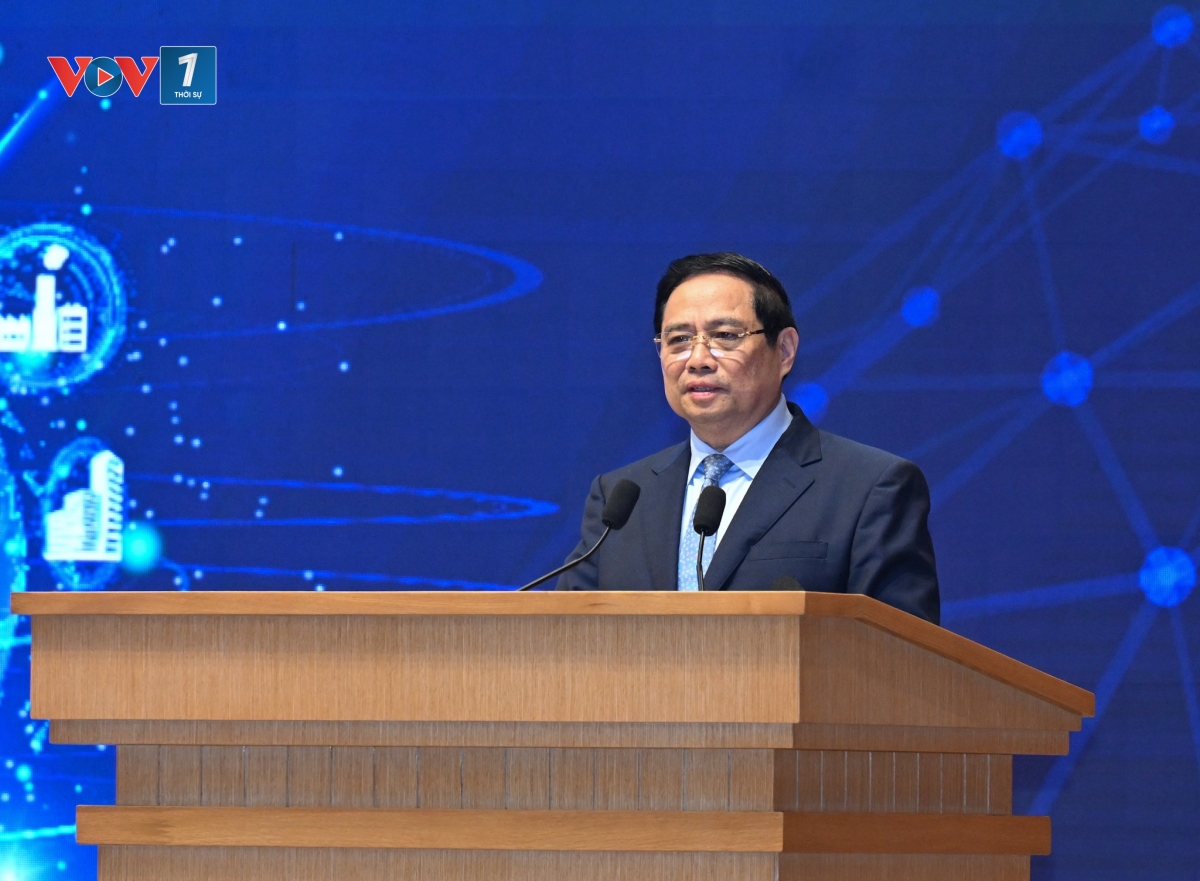
Prime Minister Pham Minh Chinh
The Head of Government stated that digital platforms have made a “leap forward” in capacity, technology, and quality, as demonstrated by achievements such as: accelerating the deployment of 5G services; Vietnam’s mobile internet speed rising by 50 places, entering the world’s top 20 in 2025, among others.
The digital economy has seen strong development, increasingly affirming its role as an important new growth driver, as the number of digital technology enterprises grew rapidly from 58,000 in 2020 to approximately 80,000 in 2025. The export turnover of digital technology products increased sharply, estimated to reach USD 172 billion in 2025. Cashless payment has become widespread across all businesses, households and individuals. 100% of healthcare facilities have implemented health insurance medical examination and treatment using Citizen Identification Cards.
However, the Prime Minister also noted that many new business models have emerged without appropriate legal frameworks. Mechanisms for data sharing and exploitation between public–public and public–private sectors remain limited. Digital infrastructure development is uneven. Digital human resources are weak and insufficient. The rate of investment in science and technology, especially core technologies such as AI, semiconductors, cybersecurity, and cloud computing, remains low compared to development requirements.
In the coming period, the Prime Minister emphasized and required implementation in the spirit of “Five Pioneers, Five Haves and Five Nos”. Among these, five Pioneers are pioneering in institution building; pioneering in technology development; pioneering in digital infrastructure development; pioneering in database development; pioneering in fulfilling social responsibility in the digital environment. Five Haves are modern, synchronized, and seamless digital infrastructure; data that is “accurate – sufficient – clean – live – unified – shared”; high-quality digital human resources and universal digital skills for the entire population; a strong force of Vietnamese digital technology enterprises; a safe, civilized, humane and people-centered digital environment.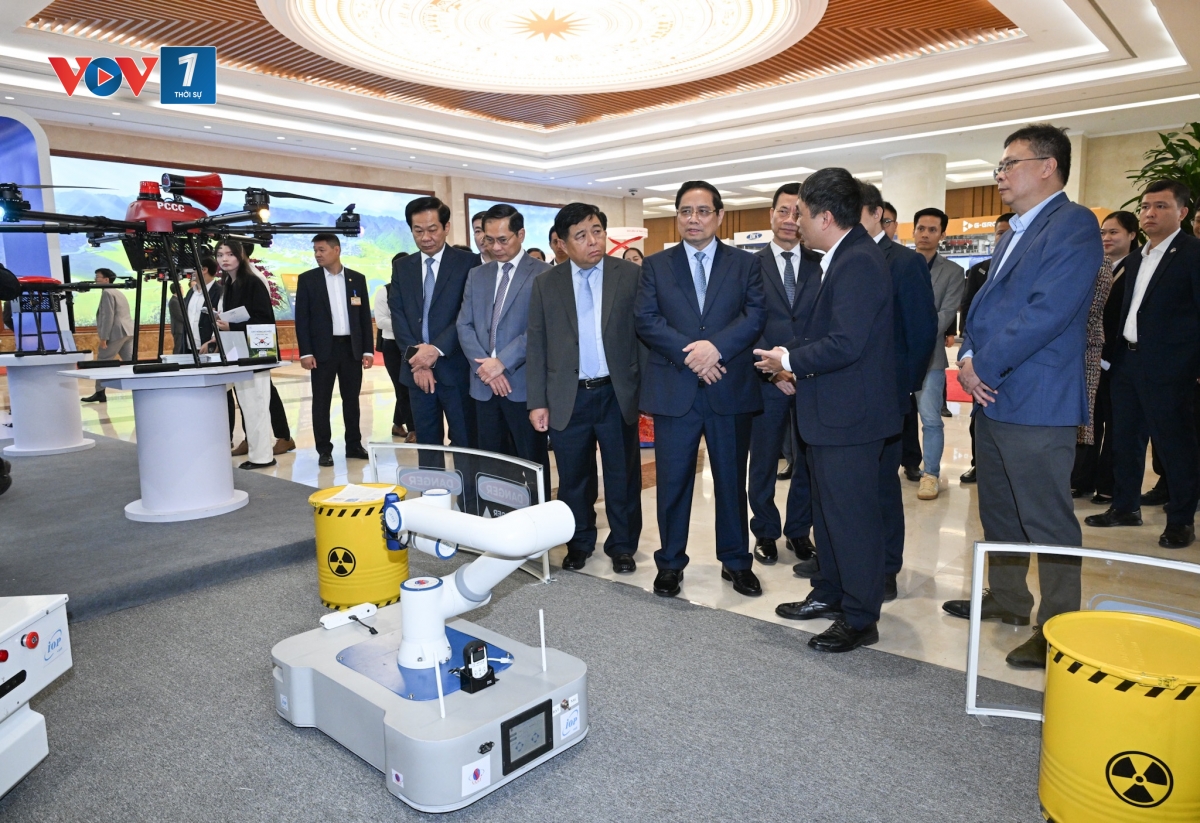
In addition, the spirit of the “Five Nos” includes: no paperwork, cash or administrative boundaries in transactions; no limits and no stopping points in development; no negativity, wastefulness, corruption or vested interests in operations and development; no fragmentation, compartmentalization or closed-off approaches in governance and operation; and leaving no one behind in the development process.
“Development must not leave anyone behind, especially vulnerable groups such as persons with disabilities, children, the lonely and orphaned, the elderly, and disadvantaged people. We must strongly promote the ‘Digital literacy for the people’ movement everywhere, bringing digital transformation to every alley, every household, and every individual. Programs and digital skills must be built for all citizens and businesses. With a new momentum and renewed determination, we must act together in the spirit of developing a strong, effective, inclusive, sustainable, fair, and equitable digital economy, digital society, and digital citizens for a strong and prosperous Vietnam,” Prime Minister Pham Minh Chinh emphasized.
The Prime Minister called for accelerating digital transformation across all sectors and fields of the economy, while promoting the development of an inclusive and human-centered digital society. He requested the Ministry of Science and Technology and other ministries and sectors to urgently develop guiding documents for laws passed by the National Assembly, especially those related to science and technology, innovation, and digital transformation. He also urged efforts to rapidly expand nationwide 5G coverage; to establish national and regional data center systems; and to develop Vietnamese cloud computing platforms, ensuring strong capacity for big data processing and artificial intelligence.

The Prime Minister and delegates listen to an introduction on the National Digital Twin
Earlier, Prime Minister Pham Minh Chinh and delegates visited the exhibition area on the sidelines of the 3rd National Forum on Digital Economy and Digital Society Development. On this occasion, CT Group introduced the National Digital Twin, comprehensively pioneered and developed by its member company, National Digital Twin 15 (NDT 15).
Currently, National Digital Twin 15 company is implementing projects in Da Nang and Ho Chi Minh City, while expanding research and pilot testing in many countries across Asia, the Middle East, North America and Europe. The solution stands out for its flexibility and ease of customization, adapting to the specific characteristics of each city and region.
The National Digital Twin is the third and most critical axis in completing the three core pillars of a nation’s digital transformation, namely: citizens, organizations, and territories. In this regard, National Digital Twin 15 (a member of CT Group) has developed a National Digital Twin integrating more than 300 layers of input data, including data from sectoral and regional digital twins, unified into a single digital twin through AI technology.
This is the most advanced technology to date, transforming the entire physical space and human activities into the digital realm. It provides a super-capacity system for public governance, accelerating socio-economic development to the highest possible limits.
A concrete example is regional planning: previously, planning a single region required many years and extensive human resources. With National Digital Twin 15 (NDT 15), dozens of highly accurate planning scenarios can now be generated within just a few days, based on real data and real-time information.
________________________
Follow CT Group on Facebook for the latest updates and news!