

VOV1 – According to the General Secretary, thanks to Resolution No. 57-NQ/TW and Resolution No. 68, there have emerged exemplary enterprises that have made strong breakthroughs, obtaining export orders for UAVs as well as exporting chips to the Republic of Korea. The Steering Committee and relevant ministries and sectors need to pay attention to and provide encouragement to these enterprises.
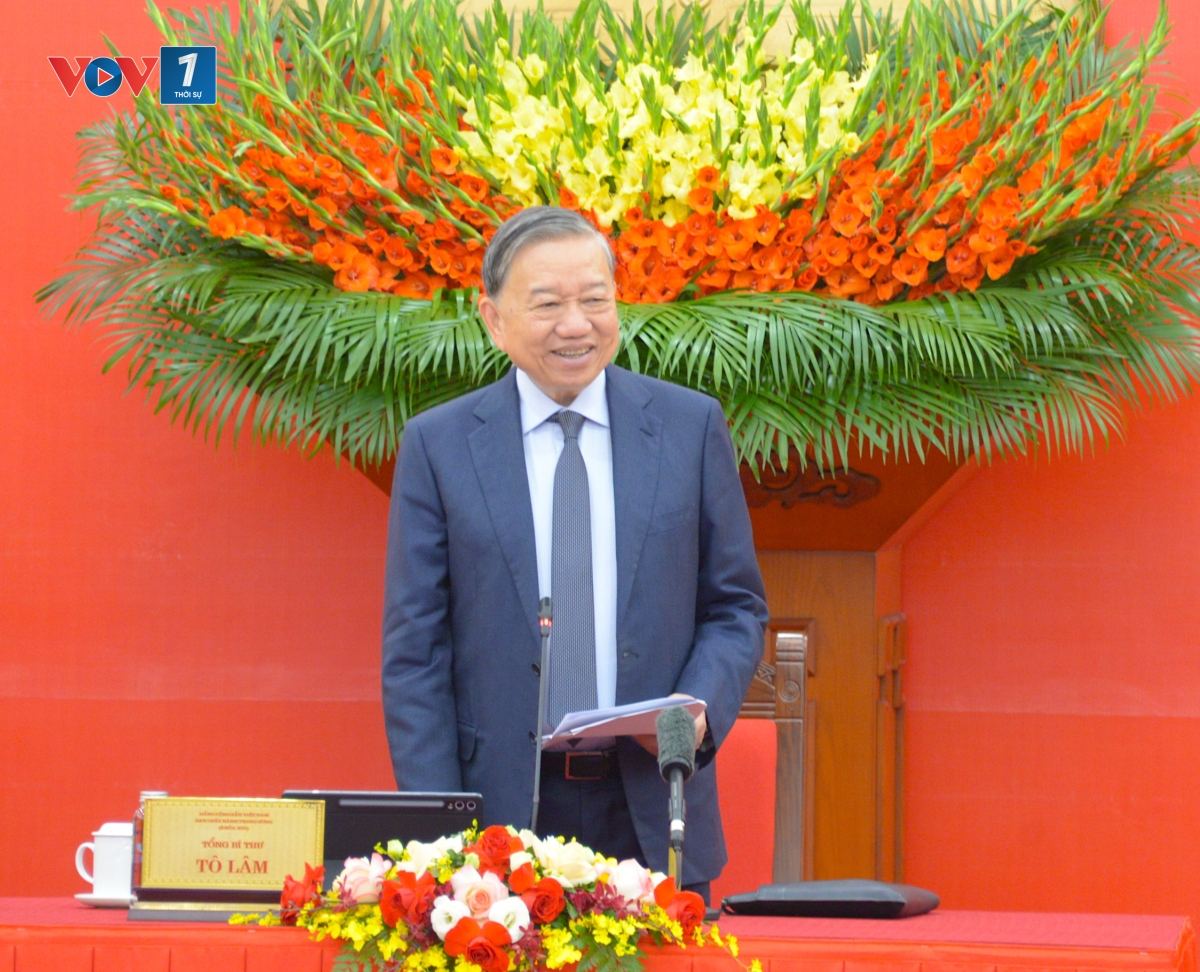
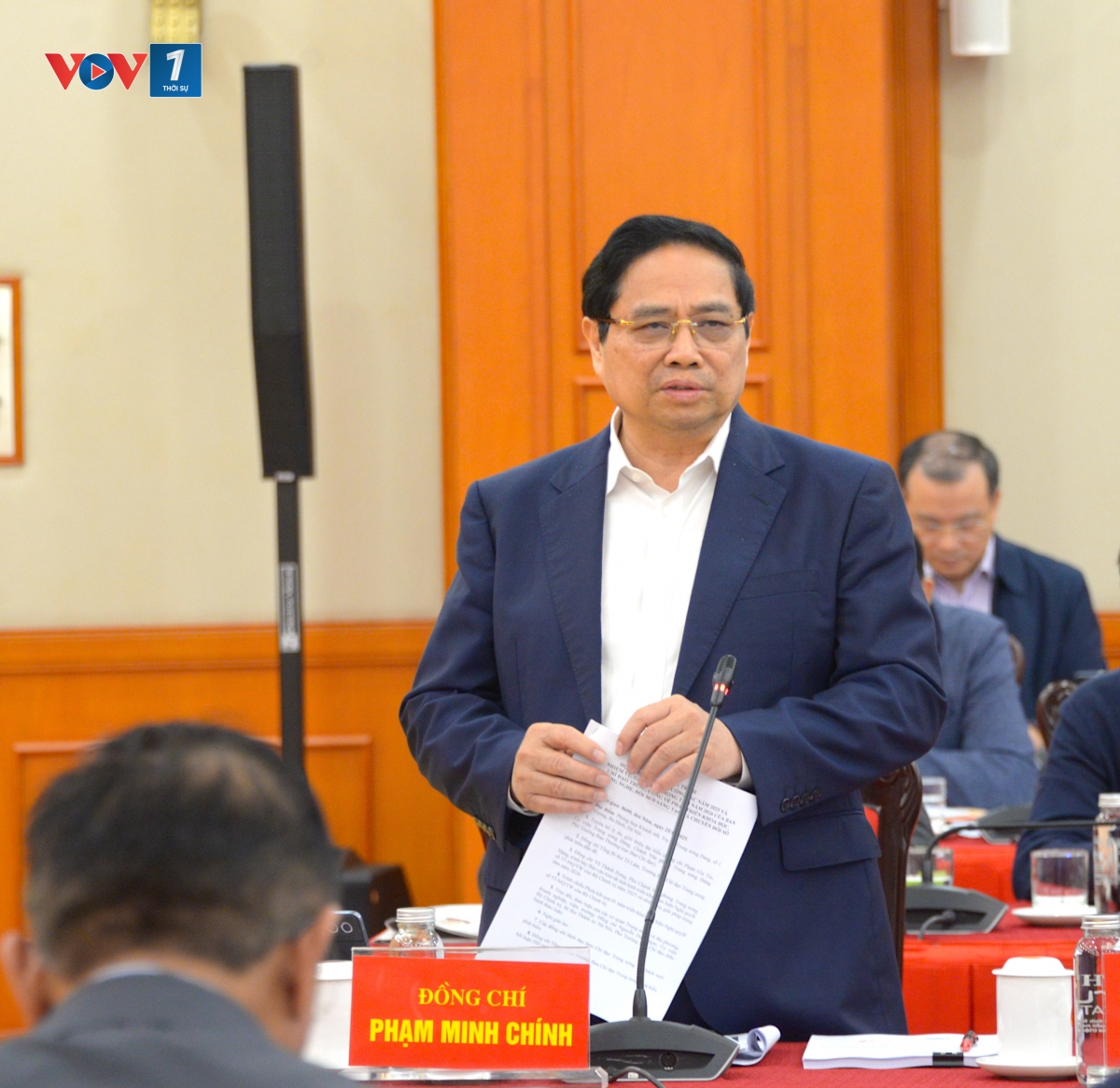
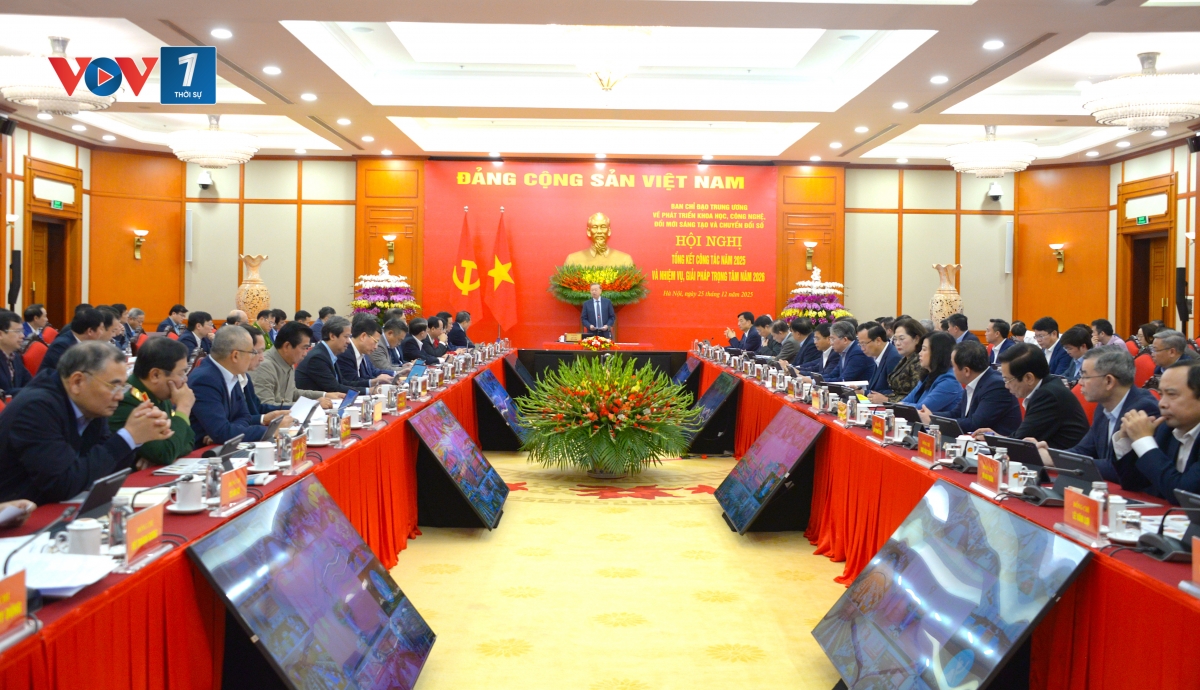
This morning (December 25), at the headquarters of the Communist Party, General Secretary To Lam, Head of the Steering Committee, chaired the meeting to review the work of 2025 and implement key tasks and solutions for 2026 of the Central Steering Committee for the development of science, technology, innovation, and digital transformation. Also attending the meeting were Prime Minister Pham Minh Chinh and Standing Member of the Secretariat Tran Cam Tu.
On December 22, 2024, the Politburo issued Resolution 57 on breakthrough developments in science, technology, innovation, and national digital transformation. This important document serves as a “guiding light” and a “strong call to action” across the Party and the people to make Vietnam a developed country with global competitiveness…
After 1 year of implementing the Resolution, the fields of science and technology, innovation, and digital transformation have achieved a number of important initial results. At the same time, alongside the continued improvement of institutions, the leadership and governance apparatus from the central to the local levels has been fully and uniformly established. The leadership, direction, and management of the Central Steering Committee have been carried out in a resolute, continuous, and focused manner, with clear priorities. The figure of 1,298 tasks assigned by the Government to ministries, sectors, and localities reflects the scale, scope, and comprehensive nature of the direction across multiple fields and levels.
In addition, Viet Nam’s digital transformation has truly accelerated, recording clear and visible achievements on the global stage. Specifically, the country ranks 67th in the telecommunications infrastructure index, 18th in internet speed, 71st in e-government, and 17th in information security. The digital economy grew by 8.6%, revenue of the ICT industry rose by 26%, and the Human Development Index (HDI) in 2025 reached 0.766, ranking 93rd out of 193 countries. Notably, Viet Nam’s position in innovation continued to improve, ranking 44th out of 139 countries, leading the group of lower-middle-income economies. Nationwide, there are approximately 4,000 innovative start-ups, including two technology unicorns…
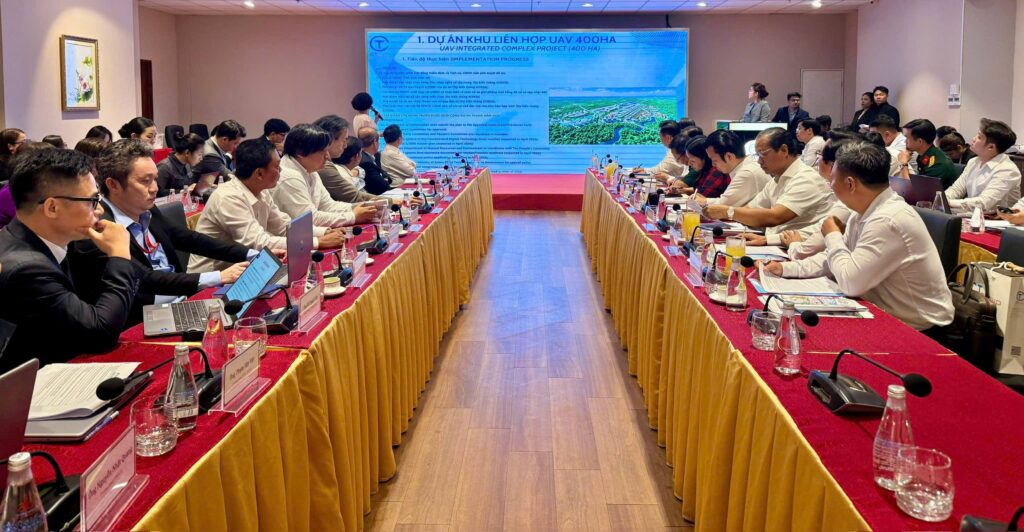
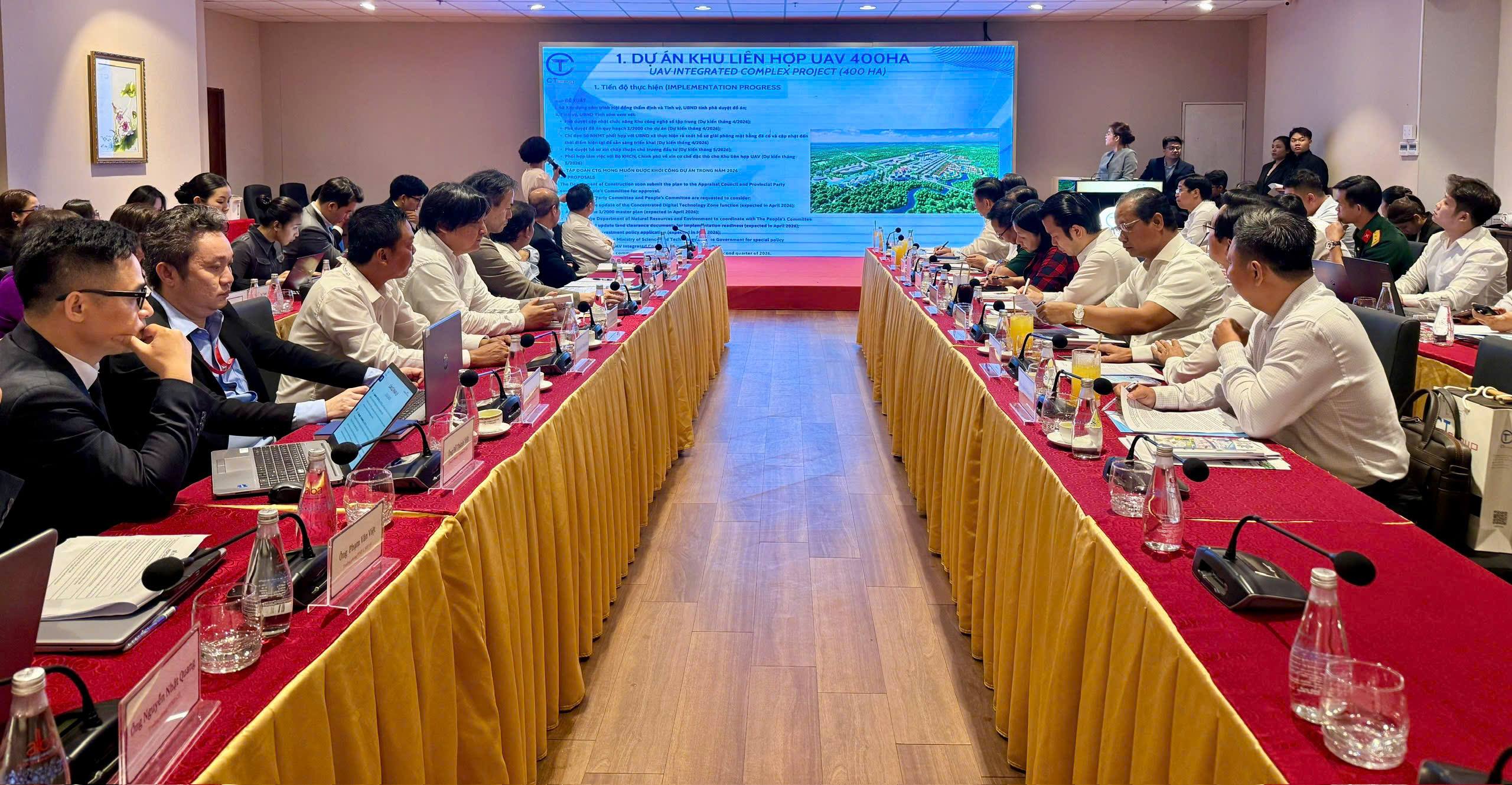
In his concluding remarks at the conference, General Secretary Tô Lâm clearly stated that 2026 is of particularly great significance, as it will be the first year of implementing the Resolution of the 14th National Party Congress, with very high requirements set to realize the country’s two centennial goals. At the very beginning of the term, the Party Central Committee will issue two strategic resolutions on transforming the country’s development model based on science and technology, and a resolution on strategic solutions to mobilize resources for double-digit growth. This demonstrates the particularly important role—foundational and core in nature—of science and technology, innovation, and digital transformation. These are no longer a matter of choice, but a mandatory requirement for achieving rapid and sustainable national development in the coming period. At the same time, the General Secretary set out seven orientations, which also constitute guiding viewpoints that need to be thoroughly grasped and implemented in the time ahead, stating: “There must be unified agreement in identifying the guiding motto for 2026 as ‘Breakthrough action, spreading results.’” In 2025, we completed the phase of ‘initiation and building momentum’; in 2026, we must immediately move into ‘acceleration.’ What will be decisive at this stage is the capacity to organize implementation, discipline in action, and output results. Each ministry, sector, and locality must shift from working according to plans to working according to objectives and products; from reporting on progress to reporting on effectiveness; and from ‘doing something’ to ‘doing it thoroughly and to the very end.’ Central and local agencies must deeply grasp this spirit, prioritize the full and timely allocation of resources for infrastructure, data, strategic technologies, and high-quality human resources, while establishing control mechanisms to ensure effectiveness in investment and implementation,” General Secretary To Lam said. According to the General Secretary, with the implementation of Resolution No. 57-NQ/TW and Resolution No. 68, a number of exemplary enterprises have made breakthrough development, securing export orders for UAVs and exporting semiconductor chips to the Republic of Korea. These enterprises have now announced investments in two projects—the largest UAV integrated complex in ASEAN and the largest near-space economy center in ASEAN—which the Steering Committee and relevant ministries and sectors should pay attention to and encourage. With regard specifically to the task of institutional improvement, the General Secretary proposed that ministries and agencies urgently issue, or submit to competent authorities for issuance, guiding documents for the implementation of laws passed by the National Assembly in 2025, ensuring that these documents take effect concurrently with the laws, without backlog, and are completed no later than the first quarter of 2026. At the same time, it is necessary to proactively review, adjust, and supplement mechanisms and policies that have not yet been adequately addressed in already issued documents, in order to continue removing obstacles and further improving the institutional framework. Not only must bottlenecks be resolved, but the goal must also be to transform institutions into a “competitive advantage” for the development of science, technology, innovation, and digital transformation. Strong efforts should be made to develop applications and concrete products that serve socio-economic development and the needs of the people: “Resources must be concentrated on strategic technologies and product commercialization; science and technology and innovation should be promoted based on close linkages among the State – Universities – Enterprises, serving as the core for forming an innovation ecosystem that prioritizes high-tech parks, innovation centers, smart urban areas, as well as application testing spaces and diffusion platforms. The State must play a facilitating and enabling role, removing barriers, while also acting as the first ‘customer’ to place orders for products, services, and solutions in science, technology, innovation, and digital transformation, thereby creating an initial market for research outcomes.” This was emphasized by General Secretary To Lam.
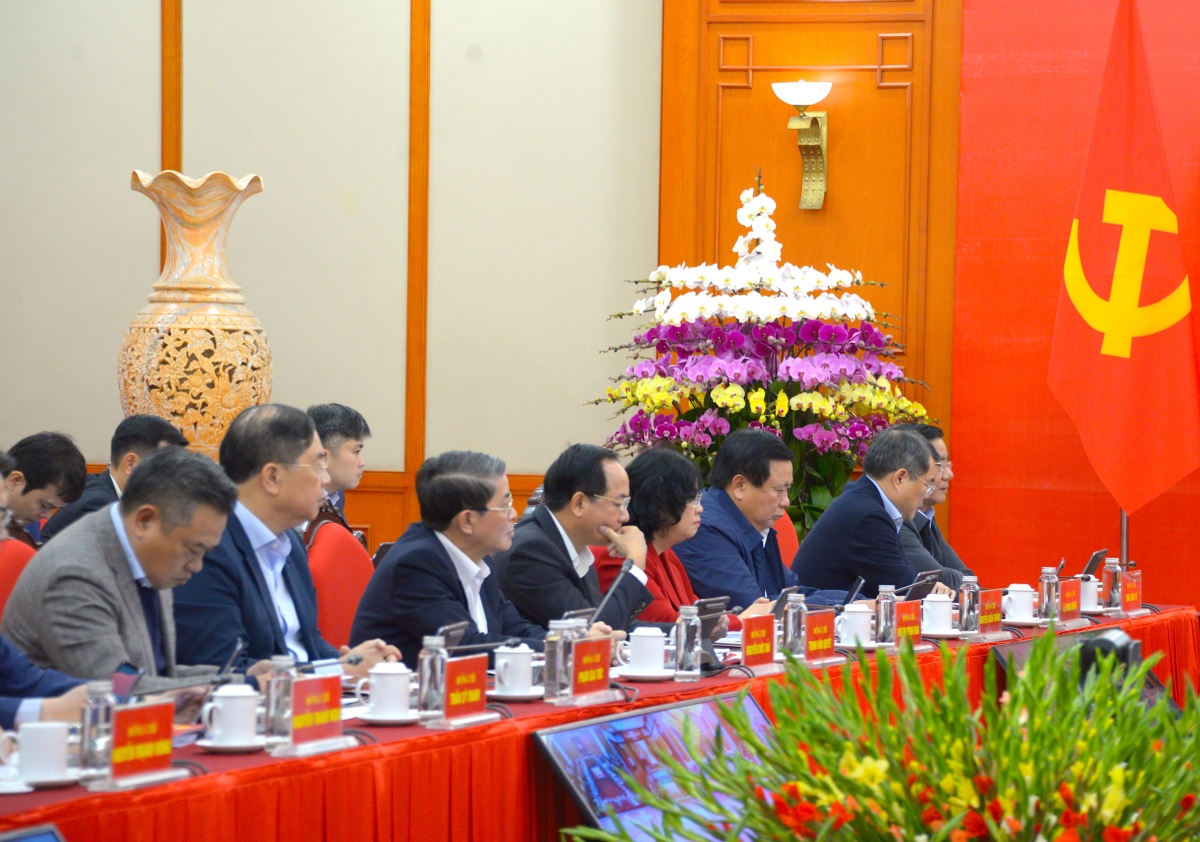
On this occasion, the General Secretary also requested that ministries, sectors, and local authorities ensure information safety, cybersecurity, and digital sovereignty, as these are prerequisite conditions for sustainable development. Agencies, units, and localities are to urgently thoroughly grasp and implement the Directive of the Secretariat on strengthening the work of ensuring cybersecurity, information security, and data security within the political system, as well as the overall plan of the Steering Committee for the implementation of this matter. At the same time, attention is drawn to the issue of combating waste, as we are making large investments for major objectives, but effectiveness must be ensured. If not strictly controlled, there is a risk of creating enormous waste, such as financial waste, waste of resources, waste of human resources, and even waste of opportunities. Therefore, it is necessary to identify potential risks early in order to put in place preventive solutions from the outset, rather than waiting until consequences occur before addressing them.
________________________
Follow CT Group on Facebook for the latest updates and news!